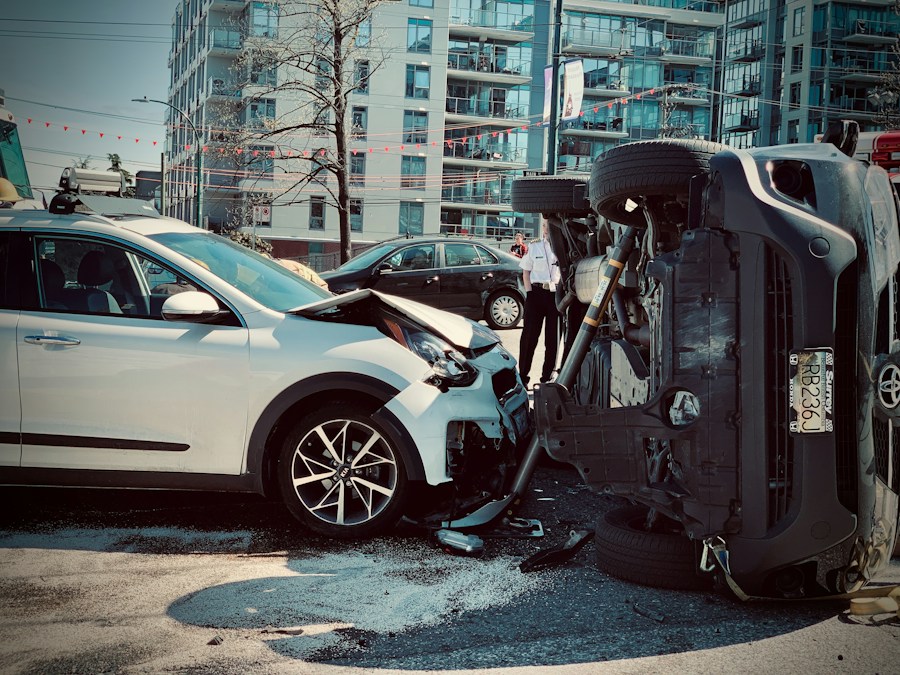
At the scene
Your safety and anyone else’s comes before any paperwork. Once everyone is out of traffic and help is on the way, these are the details that are easiest to lose.
- Call 911 if anyone is hurt, if a car cannot be driven, or if the other driver leaves or refuses to stop.
- Ask the responding officer for their name, badge number and the report or incident number.
- Photograph every vehicle from four sides, the plates, the road, signs and signals, skid marks and debris.
- Write down the other driver’s name, phone, licence number, insurer and policy number. A photo of their insurance card works too.
- Ask anyone who stopped for a name and a phone number. Witnesses are often gone within minutes.
- Say what happened plainly to the officer, and leave arguments about fault for later.
That evening
- Get checked by a doctor or urgent care even if you feel fine. Some injuries show up a day or two later.
- Write your own account of the crash while it is fresh: time, weather, speed, direction, what you saw and heard.
- Put every photo, card and note in one folder on your phone, and back it up.
- Keep receipts for the tow, the ride home, the pharmacy and anything else the crash cost you.
Over the next two days
- Tell your own insurer that the crash happened. Your policy usually requires prompt notice.
- Keep the call factual. You can report the crash without giving a recorded statement on the same call.
- Request a copy of the police report, or note when and where it will be available.
- Start a simple diary: pain, sleep, missed work, appointments, things you could not do.
- Before you sign anything from the other driver’s insurer, read our guide to calls with insurers.